ABOUT THE Lowland Tapir
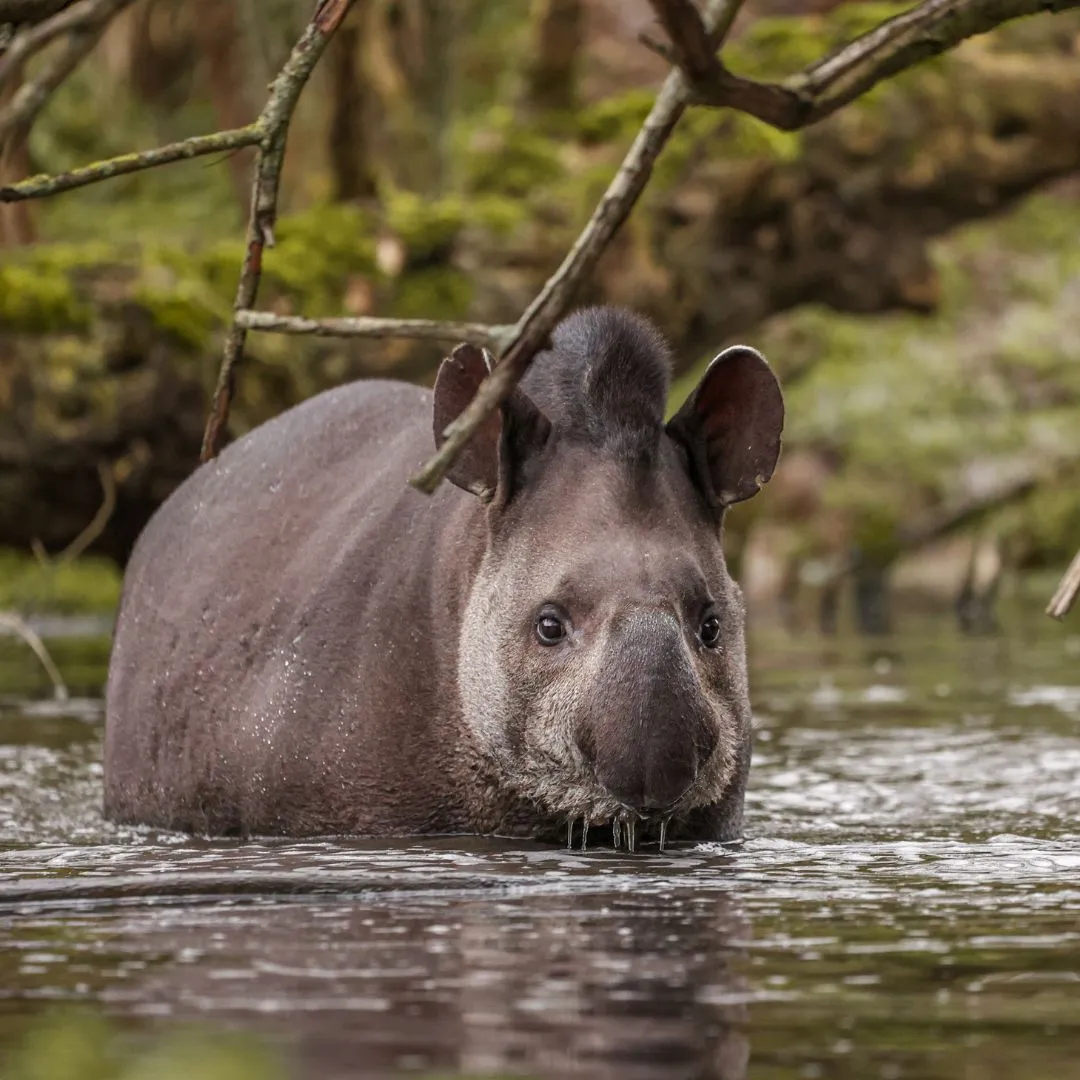
The lowland tapir, a captivating South American mammal, can be found inhabiting both montane and lowland rainforests. Within the tapir family, there are four distinct species, including the endangered mountain tapir, Baird’s tapir, and Malayan tapir. Their range spans across various countries, such as Argentina, Bolivia, Brazil, Colombia, Ecuador, French Guiana, Guyana, Paraguay, Peru, Suriname, and Venezuela.
Tapirs share a close evolutionary relationship with horses and rhinoceroses, collectively classified as odd-toed ungulates due to their uneven number of toes.
Semi-aquatic by nature, tapirs dedicate a significant portion of their time to water-related activities. They feed on aquatic plants, bathe, mate, and even relieve themselves in water. This peculiar behavior of using water for waste disposal is believed to help conceal their scent from potential predators that might be tracking them.
The water also serves as a refuge for tapirs, allowing them to evade predators like jaguars, who are not fond of water.
With their remarkable prehensile nose, tapirs employ it as a snorkel during their aquatic excursions and as a tool to pull down branches and access leaves. Being predominantly nocturnal, tapirs prefer to rest and conceal themselves during the daytime.
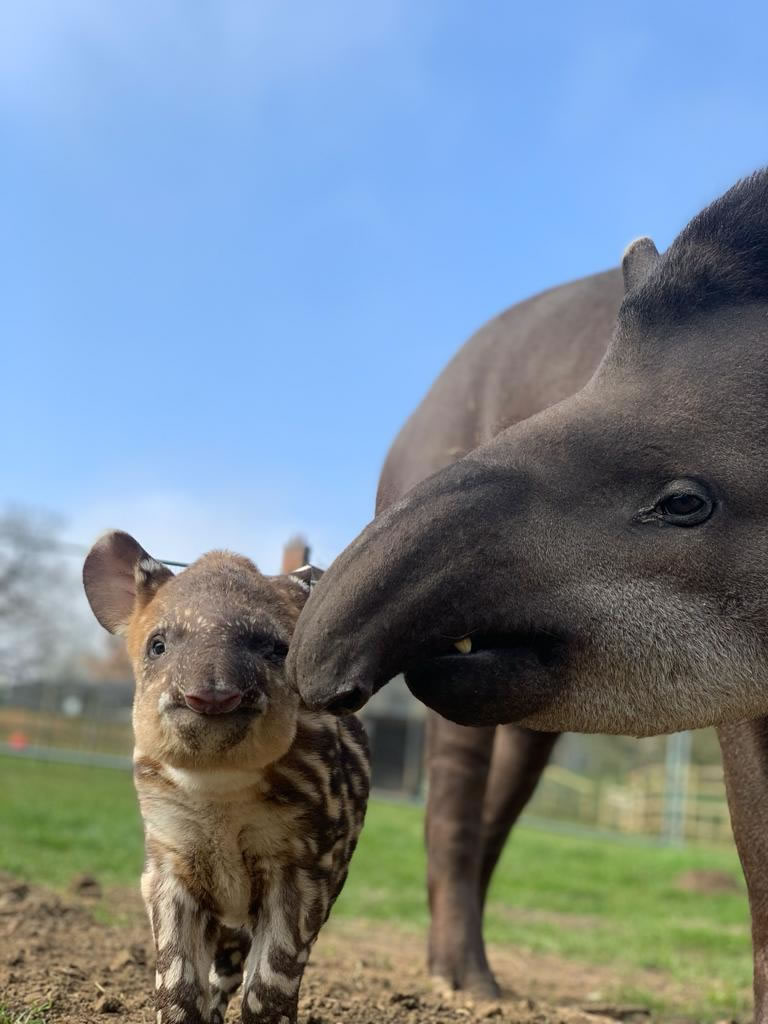
In the wild, tapirs exhibit a solitary lifestyle, coming together solely for the purpose of mating. Female tapirs undergo a lengthy pregnancy of 13 months, eventually giving birth to a single stripy brown and cream-colored offspring. This coloration aids in camouflaging the young tapir from potential predators. The young tapir remains with its mother for approximately 1 to 2 years.
Meet our Tapir
We have a delightful pair of tapirs named Teddy and Tip Tap. Teddy joined us from Paradise Wildlife Park in 2017, while Tip Tap became a part of our family from Marwell Wildlife in 2018.
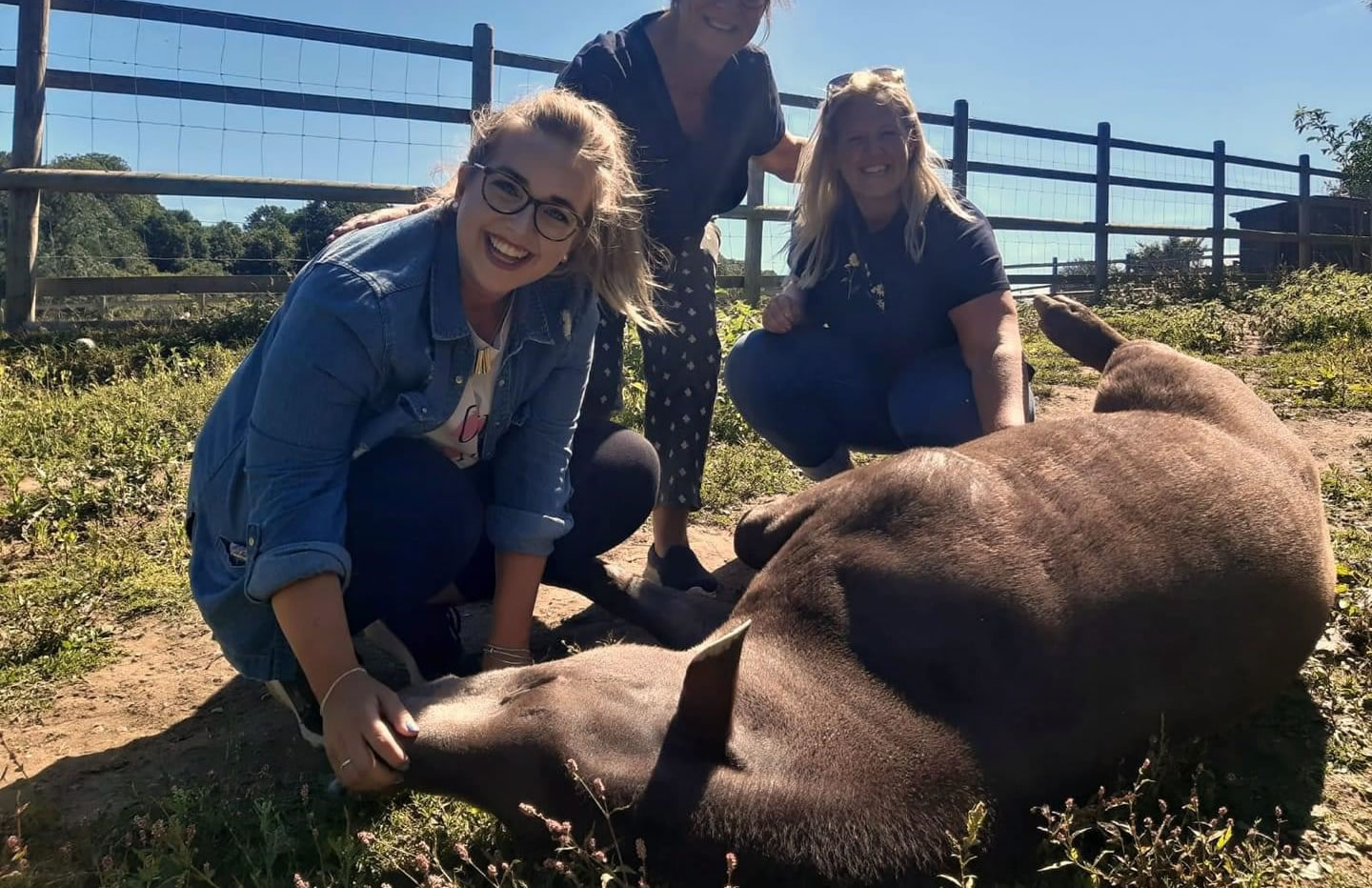
Teddy thoroughly enjoys the affectionate belly and chin scratches bestowed upon him by our dedicated keepers. With a gentle rub in these areas, he can be encouraged to sit and lie down, displaying his amiable nature.
Tip Tap, equally fond of a good scratch, greets her keepers and Teddy with enthusiastic squeaks and whistles, showcasing her excitement.
As our first European Endangered Species Programme (EEP) species, we are delighted to share the presence of these charismatic tapirs with our esteemed guests. Join us to witness the allure of these remarkable creatures and learn about the importance of their conservation.
Did you know
A group of Tapirs is called a ‘candle’
WHAT THEY EAT: Herbivorous – leaves and branches from trees, grasses, fruits; including palm fruits in the wild
HABITAT: Swamp forests, dry and moist shrublands & grasslands, and variety of wetlands
JFWP Animal Experience: Yes. Find more about Tapir Tummy Rubs»
ANIMAL SPONSORSHIP: Find more about Animal Adoptions»
CORPORATE SPONSOR: Available
Lowland Tapir Gallery




Check out some more amazing animals…










Jimmy’s Farm & Wildlife Park News